Showing posts with label climate change catastrophe. Show all posts

27 November 2016

It Would Appear Evil Has Triumphed

Evil has "trumped" good. The future can feel the reverberations.

Here's an excerpt from an essay-in-progress by Dr. Peter Carter, an indomitable climate change activist.

How bad can a Trump US presidency be?
Surely it would not be the end of world? Actually it would.
The surprise Trump win turns out to be the latest episode in a decades long overt conspiracy and campaign of deception and "big money" political influence by the American fossil fuel corporations to keep America and the world dependent on and dominated by the fossil fuel industry.
This makes Trump the greatest ever threat to world and US national security. A Trump presidency in the United States would be the end of our world, including particularly America.
During the campaign, a number of reasons were given for a Trump win to be a national security nightmare, but the greatest, most definite security issue has been all but missed.
Trump as president would be the end of US national and world security because his stated agenda is to pollute the planet to death with catastrophic levels of atmospheric greenhouse gases, global warming, climate disruption, and ocean acidification.
This is definite. It is in his platform on his campaign website, where, if elected president, Trump promises to "unleash America’s $50 trillion in untapped shale, oil, and natural gas reserves, plus hundreds of years in clean coal reserves." That "unleashing" — at a time when we should be desperately trying to meet a goal of zero carbon emissions — would result in the collapse of the life-sustaining biosphere, both land and oceans.
Since the Trump win, several reasons have been given why the Electoral College in the United States should not confirm Trump, but global climatic annihilation is not one of them.
The reason a Trump presidency would be the end of the world, which he has made no secret of, is that he rejects any measures to mitigate the effects of atmospheric greenhouse gas pollution. Worse still, his election platform is to burn all the American fossil fuels as fast as they can be fracked and mined. According to the science of greenhouse gases, this will lead to the end of American and world agriculture, ending civilization and making an unlivable world for today’s children.
The resulting global climate disruption, with its ever escalating heat waves, forest fires, drought, ocean heating, ocean deoxygenation and ocean acidification makes the Trump agenda for his nation a death sentence for our planet.
The media gave the impression during the lead up to the election that Donald Trump had no fixed policies and just made things up as he went along the campaign trail — and they are still saying he has no election mandate. That is dangerously not the case. 
We're now hearing that Trump is back pedalling on a lot of his campaign rhetoric, including admitting that climate change might be real. But let's not be fooled. This man is a shill for Big Money and the fossil fuel corporations — and we know they will stop at nothing. There is no longer any distinction between the Church of Greed and State in the United States of America.

26 August 2012

Cole Porter and the Climate Reality Leadership Corps

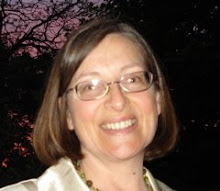
That's me, at the Climate Reality Leadership Training 
Well, my trip to San Francisco to train with Al Gore and the Climate Reality Project was invigorating and memorable! After a tiring but fascinating 22-hour train trip, it was inspiring to spend three days with 1000 other like-minded and like-hearted people ... from 57 or so different countries, no less! I'm now a trained presenter, and look forward to sharing the Climate Reality slide shows with people of all ages and in all walks of life throughout my small corner of the world.

I had to laugh that even amongst allies, I still found myself holding a much more acute view of the global warming problem, the necessary solutions, and the power our fossil-fuelled industrial civilization (no, not the whole human species) holds to radically alter the biosphere, making it inhospitable to life, period (not just to human civilization). It's somewhat of a curse living with a full-time science advisor (aka my husband) who spends practically every waking moment reading and synthesizing the scientific research on global warming and climate change. I often rue knowing so much about what's really going on.
But a great gal (and a science teacher) sitting next to me restored my faith in a master evolutionary plan when she reminded me that the newly discovered creatures living around the thermal vents at the bottom of the oceans will survive just fine.

 After all, they didn't evolve in the narrow atmospheric temperature range that we're used to. So all hope is not lost. If we don't get our butts in gear and stop our carbon emissions while pulling CO2 out of the air, humans will disappear and millions of other species will disappear along with us.

But the tiny animals that don't need the sun (relying on chemotropic bacteria instead of photosynthesis for their energy) and that can survive water that's hotter than boiling will do just fine on a too-hot-for-the-rest-of-us planet. I suppose that soon enough, they'll crawl out of the ocean and repopulate the Earth. Just not with us. Or roses and lilacs and elephants and otters. (Actor Christopher Reeve used to say, "Once you choose hope, anything's possible." 
So I won't be giving up anytime soon.)

I'm not sure yet whether I'll tell the full truth about the reality of the climate change situation when I make my presentations. Mr. Gore has decided not to, choosing instead to talk about the end of human civilization. He probably knows his audiences well. Picturing the world without "me" in it is existentially difficult. Imagining a world completely devoid of the human species is nigh on impossible.

I keep thinking that this desperate state of affairs will motivate the pants off people to do whatever it takes to cool the globe. My theory, ahem, doesn't seem to work in practice. I don't know what the philosophers have to say about my dilemma (full truth or only partial truth?), but some psychologists believe that people (in our North American society, at least) simply cannot handle knowing the reality.


I watched De-Lovely recently, a movie about the life of Cole Porter. (No, I don't spend every waking moment contemplating the end of life on Earth.) I knew nothing about him except for some of his songs, so I did some research. (Yes, this is relevant to the question at hand ... wait for it.) It seems that some of his shows in the 1930s were failures. According to Wikipedia sources, this convinced Porter that his songs did not appeal to a broad enough audience. In an interview, he said, "Sophisticated allusions are good for about six weeks ... more fun, but only for myself and about eighteen other people, all of whom are first-nighters anyway. Polished, urbane and adult playwriting in the musical field is strictly a creative luxury."

So you see, w
ith both Al Gore and Cole Porter suggesting that people won't listen to what they don't want to hear, I'm still torn on whether to tell people about the impending consequences of Arctic summer sea ice collapse (2012 is the worst year ever) and the drought we're seeing all over the world (2012 appears to be the worst year yet for Northern Hemisphere drought). (See short videos below.) I welcome your frank (but not brutal) advice on which way I should go. Thanks!


Arctic ice extent is critical to Earth's temperature. Less Arctic summer sea ice means more Northern Hemisphere heat and climate disruption. 


Can you say "bread basket"?

11 March 2012

Earthworms After a Rain: A Metaphor for Climate Change Catastrophe

I took my (newly gluten-free and therefore pain-free) body for a run this morning. It had poured rain all night and so I wasn't surprised to find a huge earthworm on the road at the end of my driveway.

I couldn't just leave it there because it would soon be run over by a passing car. But I'm a bit squeamish about picking up worms (which does surprise me, since I played with them as a child). So I got a stick and gently tickled the long, thin worm into a squirmy spiral of fat worm (worms are so fascinating), which was then easy to pick up with the stick and move to the side of the road. Remembering the old joke about the Boy Scout who helped the little old lady cross the road, even though she didn't want to cross, I hoped I had put the worm on the side it was heading to.

I carried on my jog, feeling pleased that I'd done my good deed for the day. Another few steps, and DISASTER! Worms everywhere! More worms than I've ever seen before. Big mama worms, baby worms. Pink worms, bluish worms, terra cotta worms. I was stunned! The road was covered with soon-to-be squished or dried out annelids. I realized very quickly that there was no way I could rescue all these worms.... Especially if I was to finish my run and get on with my day.

All I could do was try to avoid stepping on them. My eyes welled up with sad tears, but that only made it worse because I could no longer see the road clearly.

And then it struck me. Here was a metaphor for what's happening in the world today, in the face of climate change catastrophe.
• Some people care, but feel helpless against the sheer size of the problem.

• Some people don't notice worms ... or vulnerable populations.

• Some people just don't care about worms ... or those who are already losing their homes and homelands.

• Some people are skeptical that thousands of worms on the road constitutes a problem. "Can you show causal effect? Maybe the moon's plasma whatever caused it."

• And some people deny the problem completely. "Worms? What worms? I don't see any worms. Those are just dead sticks on the pavement." "Global warming? What global warming? There's no global warming. Those refugees are just sissies who can't swim."
I hope the psychologists are ready for the day when these comfortable skeptics and deniers discover that their greed, their lack of compassion, and their refusal to see and accept the problem are responsible for their children's lack of a future. Progenycide.

Should we be trying to put all the earthworms out of harm's way? I don't know. Should we be trying to get to zero carbon as rapidly as possible? Oh yes.

p.s. Thanks to schwarz wetter for the great photo of an earthworm after the rain.

27 October 2011

"Selfish &%$#@!" Theme Week: Thursday

Selfish &%$#@! do this self-righteous, oh-poor-me thing whenever anyone challenges their fabrications, mis(anthropic)interpretations and cherry-picked data.

These climate change denialists keep forgetting that (a) they do indeed have the right to their own opinions (even when those opinions make them look like selfish &%$#@!), (b) they do not have the right to make up their own facts, and (c) all the evidence, all around them, shows them to be wrong, dead wrong. With tragic, lethal and catastrophic results.

And now that panel reports are showing the economic costs of climate change, and research reports are showing the urgency of the climate change emergency, and agronomists (you know, those scientists who study soil management and crop production) are freaking out about the dual hazards of too much or too little water and higher temperatures — well, now we're seeing the true colours (and complete ignorance) of some of our favourite selfish &%$#@!.

For example, as Reuter's reports, (Canada's) "Environment Minister Peter Kent responded by saying the report showed the importance of adapting to climate change." Dear kind sir, how do people adapt to burning forests, withered crops, unsafely high temperatures, increasingly freakish weather? How? If you had an ounce of understanding (of the, ahem, environmental science underlying the climate crisis, Mr. Environment Minister), courage or compassion, you would be talking about lowering Canada's greenhouse gas emissions as rapidly as possible, as quickly as possible, starting yesterday!!

But because you selfishly put your campaign contributions and your narrow worldview before the lives of all the young people alive today, you do nothing but kowtow to fossil fuel interests.

I could go on, and on and on and on. But I want to — selfishly — enjoy the rest of my day. So let me just leave you with this. Now there are complaints that renewable energy infrastructure is leading to ugliness ... as though power lines and oil pipelines are not ugly. As though famines and droughts and floods are not ugly.

I don't know ... can selfishness get any deeper? Any more callous? "I want my (own ugly) brand of beauty back!" Then stop using so much energy, doughbrain! Sheesh. (Oops, am I going to get in trouble for calling someone a doughbrain?)

p.s. For an interesting look at transmission tower as art, by extension proving that wind turbines and solar panels can also be seen as art, click here.

08 May 2011

A Compassion Tune-up, with a Hidden Message

Haven't done a compassion tune-up in a long time, so here goes (for Mother's Day).

What the World Needs Now has long been a favourite song of mine, though I always seem to forget how special until the next time I hear it. Well, I heard it the other day in a coffee shop, and burst into tears at a certain line.

I'm going to include two versions here. The first one had me bawling yesterday (and again just now). I'm old enough to remember the assassinations of John, Martin and Bobby — the end of an era of innocence, it seemed, even at my young age. Please watch this version first, as a general compassion tune-up. Then I'll explain why the song itself made me cry over my chai latté the other day.


This next version focuses on visuals that support the lyrics. (Some of the lyrics aren't quite right, but I applaud this speaker of English as a second language.) See if you can pick out the lyrics that impacted me so much in the café.


Did you guess these two lines?
Lord, we don't need another meadow...
There are corn fields and wheat fields enough to grow (not "glow" ;-).
It's more a curse than a blessing to know how devastating the impacts of climate disruption will be on agriculture. I've realized that the world needs more than love. It's no longer the only thing that there's just too little of. The food security of vulnerable regions and populations around the world is already and increasingly at risk, and even in developed nations, we are only one or two bad crop failures away from chaos. (And this is more and more likely as we allow the Arctic summer sea ice, which serves as an air conditioner for our summer crops, to disappear.)

We forget that we've evolved into an agricultural species, and we could soon be experiencing food shortages that will shake human "civilization" to the core. Indeed, climate change has the potential to turn us into anything but civilized; when food and water are scarce, love and compassion will be the last things on our mind. (That's why the US Pentagon sees climate change as a huge security threat.)

My Mother's Day wish for all the mothers in the world? That our leaders — local, national, international — acknowledge this urgency, and seize the day and take action before it's too late. Perhaps if enough of us become like mother bears — fiercely protective of our children — our leaders will have to listen, "get it" and act. What the world needs now is a very different kind of love.

31 January 2011

A Different Perspective on Fear (Turning Our Cowardice on Its Ear!)


A lovely friend who's a therapist sent round an essay by Dr. Robert Anthony entitled Are You Motivated by Fear?

Dr. Anthony explains that most of us stay in our comfort zone precisely because leaving that little nest makes us feel uncomfortable. He says, "Uncomfortable is a catchall term that encompasses many emotions; fear, unworthiness, doubt, anger, hurt and distrust, to name a few. Since we have labeled these emotions as bad, we don't want to feel them and so we crawl back into our nests."

Now it becomes interesting:
Except for rare occasions, most of the fear that we experience is over imagined circumstances or consequences. But, since fear keeps us from doing things, we never really check out the validity of the fear itself. A feedback loop of fear --> not doing --> ignorance --> then back to fear develops.

[...] Let's look at what happens when the body feels fear; adrenaline, glucose and other energy producing chemicals are released into the bloodstream. Our senses actually sharpen when non-essential fears* such as "Did I remember to [turn off the iron]?" pop up and we gain an instant ability to focus on the task at hand.
And here's the important insight:
When we are outside of our comfort zone, most of the time, the only thing we are in danger of is learning something new.

What is helpful in learning something new? Energy, clarity and the ability to focus — all available to you via your friend, fear.
So, while certain psychologists, mainstream environmental NGOs and several climate scientists keep saying we mustn't frighten the masses by telling them the truth about the climate change emergency we're in and the global catastrophe we're producing, new age therapists and medical doctors know that fear can actually be put to good use. Nothing like a little energy, clarity and focus to help us out of our climate change mess.

* I've thought about the use of that term, non-essential fear. I believe Dr. Anthony means we're not talking the "fight or flight" kind of fear here. And, frankly, most people in most industrialized nations haven't been hit hard enough by the ravages of climate change yet to be truly afraid ... it's still a "non-essential fear" (time-wise for us, not magnitude-wise), which gives us time to put our energy, clarity and focus to work.

26 March 2010

The Precautionary Principle Cautions Us to Be Cautious

Have you heard of present-day trolls? (Not the kind that used to lurk under fairytale bridges, but certainly similar.) It's the term used for people who, for fun or money perhaps (I don't think anyone knows their motives for sure), show up in the Comments section of practically every blog, anywhere in the world, at all hours of the day and night, that mentions global warming and climate change — to cast aspersions on those who are concerned about the climate change emergency.

You can tell the trolls by the way they spew things like, "Where's your PROOF?" or "What's your evidence?" when the rest of us are trying to discuss solutions (and the evidence is so accessible, it's completely disingenuous that they keep asking us to track it down and present it to them — a time-wasting manoeuvre they like to use that came to light during the Hackergate thing).

So, to the trolls, a cautionary tale about caution. The "precautionary principle" doesn't insist on 100% proof or complete evidence (although the people already impacted by climate chaos must really wonder about the audacity of skeptics and deniers to keep questioning the existence of global warming).

The precautionary principle says that if there's a chance of harm, we'd better slow down or stop — not keep going with something harmful until we know absolutely, totally, utterly, perfectly, entirely, wholly, fully, thoroughly, unreservedly, definitely, certainly, positively, unconditionally, categorically, unquestionably, undoubtedly, completely and 100% that the suspected cause is indeed the cause.

Sober, intelligent and educated people don't play Russian roulette with their children's future. They just don't.

p.s. The trolls haven't found Compassionate Climate Action yet. Not sure if that means my blog is really small potatoes — or that they can't argue with compassion.

Here's a video from the University of Minnesota's Institute on the Environment (IonE) that explains all the reasons for caution and the precautionary principle. The only thing I disagree with is their call for low-carbon technology. If we don't get off carbon (ie, all fuels, aka The End of the Burning Age) and get to zero-carbon technology, well... let's just say that wouldn't be a cautious approach to avoiding climate catastrophe.

25 March 2010

If You Win the Wrong Game, You're a Loser

My husband has been out on the roof for several days in a row, doing some repairs and spring maintenance. So we've left the window out, and have been enjoying "camping" in our loft at night. With warm comforters on the bed and all that fresh air, we find that we're sleeping better at night and waking up in better moods and higher spirits.

All that to preface a thought that came to me this morning while I was lying in bed listening to the birds sing their greeting to a new day.
If you play at the wrong game and win, that makes you a loser.
Do you think that rich CEOs of big corporations that make their millions by pillaging the planet and exploiting its people listen to the birds sing in the morning?

How are we going to change the game, convince today's "winners" that they're actually losing out? And squandering everyone else's chances at surviving climate change catastrophe?

Does this look like a man who listens to birds sing?

14 March 2010

Good Grief, Why Aren't More People Talking About the Risk of Catastrophe?

When Peter presented at the climate change conference this past week, he talked about how we have to do everything we can to eliminate all risk of climate catastrophe. (We've already got climate change impacts happening all over the world, killing or otherwise ruining the lives of millions of people we don't seem to care about as we sit in our comfortable EuroAmerican homes and communities.)

A well known Canadian IPCC climate scientist — an afternoon speaker — who had snuck quietly into the back of the audience was the first to pose a "question." He said (in front of a roomful of university-aged young people) that he doesn't think we should ever use the word "catastrophe" in front of young people. It's too overwhelming, he suggested. He also said that people who use the word "catastrophic" are being alarmist.

Peter (my first and best climate hero!) responded that it would be irresponsible not to articulate the risk of catastrophic climate change. Risk, he explained, is determined by the formula "Probability x Magnitude," and so even if there is low probability of reaching the upper end of projected increases in global temperature (according to scientists using computer models that don't include Arctic carbon feedbacks, and which have quite consistently been shown to be underestimating impacts and/or overestimating timelines), if this does occur, the magnitude of impacts could be off the scales. So, do we want to risk ANY possibility of catastrophic climate change occurring?

Peter also pointed out (as I have here in the past) that being alarmed about something alarming is not the same as being alarmist. I was so proud of his respect for the right of young people to know the state of their planet and their climate.

At lunchtime, we talked with this climate scientist. His students, he told us, are all depressed and throw up their hands. He spoke of our young friend who committed suicide (though she struggled with an anxiety disorder), and another young man who is fasting until our government passes a climate action bill it promised not to delay when it prorogued the parliament. In a sense, perhaps these young people are not unlike the martyrs of social movements in the past. But also, don't the reactions of these young adults make sense? Aren't they actually logical responses to the global situation?

But there's something else happening here. Many climate scientists who demand proof and evidence and replicability and peer review within their own disciplines have quite readily latched on to this notion that climate change "doom and gloom" cause depression, despair, hopelessness, giving up and a sense of being overwhelmed in all who hear it. But where is the proof? Where's the evidence?

First, I would question how many people are indeed actually depressed, despairing, feeling hopeless and overwhelmed, and have actually "given up." Most people in our society just don't give a flying leap about the fate of the planet and future generations. Those who work with data should demand some data, not a nebulous "sense" about what's happening from some environmental NGOs.

The point I'm trying to make is that any depression, despair, hopelessness, giving up and feeling overwhelmed could be due to several variables, such as:
  • a generation that is malnourished (raised on junk food, eating foods with depleted levels of nutrients)
  • hearing how bad the situation is and then not seeing an appropriate response from leaders
  • getting confused by (or sick and tired of) the bogus claims of the denial machine
  • feeling guilty about knowing the truth of the situation and not making any effort to change things
  • hearing how bad the situation is and not seeing us older folks getting on with implementing solutions (or not believing that we even can)
  • and psychological projection on the part of the scientists (who don't want to face their own fears about climate change)
Unless and until you have evidence, verification, corroboration, authentication, documentation, validation, substantiation and replication of this unproven hypothesis, Dr. Climate Scientist Dude, you might want to consider the possibility that you're wrong ... and start doing the right thing by telling young people the truth about the potential risk of catastrophic climate change we're all facing.

23 September 2009

74 Days - Help! An Alien Climate is Invading the Earth!

A couple of days ago was the birthday of H. G. Wells, perhaps best known today for his 1898 science fiction novel The War of the Worlds, which reportedly caused widespread panic when adapted to radio in 1938 by Orson Welles, who performed it in the style of a news broadcast. In honour of those achievements, I thought I would throw out this suggestion.

What if we tried that stunt again? What if we used all the media — social and otherwise — to announce to the world ...
ATTENTION ALL EARTHLINGS! CODE RED (OR ORANGE OR WHATEVER COLOUR IS THE SCARIEST)! AN ALIEN CLIMATE IS INVADING OUR PLANET!

Is it possible that we could get some panic happening then? What about if we turned it into a reality TV show? Survivor Climate Catastrophe, maybe. Or Biggest Loser: Future Generations?

How about a travel documentary called Walk a Mile in Their Flooded Out Shoes? Or a game show called Eat for a Day, perhaps. Wheel of You're-Fortunate-for-Now-But-It-Won't-Last?

Anyway, sometimes in this saddening and maddening world of "care more about your favourite TV show characters than your kids," it's a stress reliever to imagine off-the-wall ideas that might actually get people to pay some attention.

10 July 2009

149 Days - The Power of Threatening Messages

In a sense, this carries on from yesterday's blog about the role that children can play in stimulating some climate change heart, soul and compassion from the adults in their lives.


So often, I hear environmentalists and environmental groups say that we have to be positive. This has translated, unfortunately, into two wasted decades of not telling the public the truth about global warming and the climate change emergency.


Turns out it was misguided, as well. I hope Doug McKenzie-Mohr, renowned ecopsychologist won't mind (please have a look around Fostering Sustainable Behavior - Community Based Social Marketing - it's fascinating), but I'd like to share some of his advice and insights here. (Verbatim, because I'm tired!)


Frame your Message

"Interestingly, how you present, or 'frame,' the activity [in this case, action on climate change] you are trying to promote is very important. Most sustainable activities can be presented positively (You should compost because you'll save in garbage collection user fees), or negatively (If you don't compost you'll lose money by having to pay more to have your garbage collected). Understandably, most organizations gravitate toward presenting positive rather than negative motivations to engage in a new activity. But should they? Apparently, no. Messages that emphasize losses which occur as a result of inaction are consistently more persuasive than messages that emphasize savings as a result of taking action."

That's why we need people to know the truth. We humans don't appreciate what we have until we lose it ... and we're losing it.

Carefully Consider the Use of Threatening Messages

"Is it wise to use threatening messages in communicating with the public? There is no simple answer to this question, but here are some of the issues you should consider. First, literature in the field of stress and coping suggests that we need to first appraise an issue as a threat before we are likely to take appropriate action. Rachel Carson's Silent Spring, for example, demonstrates the importance of communicating imminent threats to a wide audience. However, to be effective threatening messages need to communicate more than just the threat we face. In response to a threat, people have what Richard Lazarus refers to as two broad coping strategies [...] either problem-focused coping or emotion-focused coping. Problem-focused coping, as the name suggests, refers to taking direct action to alleviate the threat.... [E]motion-focused coping might involve ignoring the issue, changing the topic whenever it is raised in conversation, denying that there is anything that can or needs to be done, etc."

So let's tell people the truth about the climate change crisis, and then tell them it's good to feel the pain this knowledge brings, and then give them some ideas for what they can do — learn about it, talk about it, write about it. Let's all be part of communicating the not-so-imminent-anymore-because-it's-already-happening threat of climate change catastrophe.