Showing posts with label hope. Show all posts

20 October 2019

Guest Post: "A Short Rant about LOVE, and the CLIMATE"

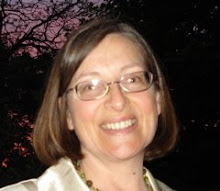
When I read Antonia Paquin's "short rant" this morning, I asked her right away if I could post it here for you. Antonia is a young friend nearby who gives her life's energy to ensuring a future for us all. Much love to you, Antonia, with thanks for sharing this with my readers!

Antonia Paquin, in Victoria (with thanks to Creatively United)


A Short Rant about LOVE, and the CLIMATE
Sometimes I find myself disconnecting from the word "climate," because it seems obscure and somewhat nebulous unless you're a scientist who studies this stuff.

I've found the following to be helpful in bringing "climate" into my immediate experience:
  • Notice the breath you just took ... now the one you are about to take. You are taking climate into your body.
  • Look outside, look around you, really LOOK, noticing the trees, the sky, the soil. You are looking at the climate.
  • Feel your heartbeat ... touch your fingers to your wrist, or neck to feel your pulse, or just feel your body moving ever-so-slightly by your heart beating. You are a living creature, interacting with your surroundings. We are also climate.
Remember the Earth is extremely resilient. She knows how to heal herself. Humans are also resilient. We can adapt to change. Though the world feels grim right now, especially with this messy [Canadian federal] election, we are inevitably forced to call into question the major systemic failings that have led us to where we are, which is a good thing!

We are being collectively called to question the ideologies, and the political and economic systems that led us into this mess, the colonial way: "Dominate people, dominate land, YOU SHALL HAVE NO HEART."

This is the movement to end all movements.

We are now being called to decolonize the crap out of ourselves and remember who the hell we are as humans.

Could it be that humans aren't somehow above the natural world?

Could it be that we don't have the right to pillage and rape the Earth?

Could it be that humans are actually inextricably ~connected~ to the Earth?? WOW! You don't say?

David Suzuki, our beloved national man of science, is preaching this message loud and clear. Time to wake up and smell the soil, friends!

Here's how we "fix the climate":
  • Tune into what Indigenous land defenders and water protectors have been saying for hundreds of years. Support these movements with your money, time, energy. Uplift voices of black and indigenous folks, people of colour.
  • Breathe deep, ground yourself in gentleness and self-compassion so that you feel safe. Then take time to call into question your own belief systems, assumptions, attitudes. We can all do this together.
  • Have "adventure conversations" with others. Bring up things like climate, the human condition, hope, guilt, fear, grief, love.
  • Vulnerability is powerful. Connect deeply with your fellow humans, know that they probably have similar fears and doubts that you have, and when we share ... it can be so healing.
  • Cry and cry and cry, then laugh. It's okay to feel like a mess. [This is my favourite line! JJ]
  • Spend time in nature, FOREST BATHING, to remember that Earth is magical and resilient. Every single cell in your body is made of the Earth. The trees and rocks and rivers are your kin. 
  • In so many ways you are also magical and resilient. Often our minds forget this, but somehow our hearts can never fully forget this. 
Okay, my rant is over. 
Thank you. I love you. 
*****

And our thanks and love to YOU, Antonia, for these wonderful calls to reconnect ourselves with our first mother.

20 November 2016

I Think Permaculture Can Save the World (or At Least Delay Our Demise)


I finally found it. In the least expected place!

I was listening to a wonderfully inspiring webinar yesterday morning called Regenerative Moringa Farming. But it was about much more than that. Aaron Elton (a Vancouverite) was actually talking about a model that is lifting orphanages and villages in Uganda (his adopted homeland) out of food insecurity and poverty with large scale permaculture projects that include regenerative moringa farming.

As someone who's going to be teaching an introduction to sustainable development to first year university students in the new year, I was excited to hear Aaron talking about initiatives that are profitable (economy), healthy (social equity), beneficial (environment) — the 3 Es of sustainability — and fun (if it ain't fun, it ain't sustainable).

One of my most important take-aways from the webinar was the importance of being open to and building partnerships (including unlikely ones) when trying to get something new off (or on!) the ground.

I think I've admitted this before, but sometimes the only thing that can get me up in the morning is the potential for preservation of our species found in the principles and processes of permaculture.

Okay, so what was it that I finally found in this unexpected place? Aaron shared a quote that crisply explains my view of hope in the face of demise.

There is nothing so well known
as that we should not expect
something for nothing —
but we all do
and call it Hope.
— Edgar Watson Howe
There. That's it. You want hope? Then do something about the climate change emergency! Do not do nothing and expect a result. False hope never saved anyone's skin.

And if you want to do something exciting, take a class on permaculture ... and then get to work in the soil.

30 October 2016

Looking for Hope in All the Wrong Places

"Beyond sad," said the friend who sent me these headlines

Hopemongering. I don't know if I'm right or wrong on this, but I have a very strong sense that it's a disservice. 

Okay, a disclaimer up front: I guess I'm already showing my bias, since the word "monger" comes with negative connotations. According to my computer's dictionary, it means "a person who promotes a specified activity, situation, or feeling, especially one that is undesirable or discreditable (such as a rumormonger or a warmonger)."

So what, you might ask, is undesirable or discreditable about people wanting to promote hope in the world? Well, if you know me, you'll know that I don't see hope as as an action verb. I see "hoping" as a kind of hand-wringing distraction from action. "Oh, I hope everything will be okay." "Fine, but what are you actually doing to make it okay?"

Furthermore, hope (the noun) is a privilege — and one that much of the world no longer has access to, or never did. If you have hope in this day and age, it's because the climate change emergency hasn't knocked your world flat ... yet. It hasn't ruined your crops, swept your home into the sea, or killed your baby daughter ... yet. It just hasn't hit the fan where you live ... yet. 

But there's no time for resting on hopeful laurels. If you have the privilege of still "having hope," then you are one of the few in a position to be doing something about the climate change emergency. Not collecting hopeful stories. Not using magical thinking. Not creating Twitter storms about optimism. Not hosting optimism summits. Not constantly seeking some magical balance between "doom and gloom" and hope. Not celebrating the micro successes that are just going to be undone by rising temperatures and the resulting climate chaos.
No! We should be spitting mad! We should be standing up and demanding IN VERY LOUD VOICES that OUR CHILDREN DESERVE A VIABLE FUTURE! We should be standing in solidarity with Standing Rock — and with anyone else who recognizes the dangerousness of the fossil fuel economy and is brave enough to stand up to Big Oil and Big Money. 

Research likes to show that appeals to fear can lead to "defensive avoidance" or desensitization and disengagement. But who has studied appeals to anger? I mean, good gawd, they are stealing the future from your children for the sake of greed and profit! They are making the biosphere inhospitable to life! They are turning 10,000 years of a relatively stable climate (that gave us agriculture and civilization and Twinkies) to ratshit! Get angry, people! For Earth's sake! You're being ripped off!

If you're not convinced that anger is the "proper" emotion to be feeling and expressing right now, consider watching PBS's People's Century, Part 19: Endangered Planet. Watch it with just one question in mind: What role did anger play? (Minute 26 is an excellent example, but watch from the beginning to understand the context.)

Or let me put this another way. If a young child comes to you, with tears in his eyes, and says, "We're killing Nature, aren't we?" will you respond, "Gee, I hope not." Or will you say — and know it to be true because you are one of those people — "Sweetheart, there are thousands of adults around the world right now working very hard to make sure that does not happen."

19 June 2016

Why We Shouldn't Be Afraid of Fear Right Now

A friend and fellow activist said that, after reading last week's blog post to her partner, they "were wishing there was a more empowering word to use than fear. Being afraid is supposed to be a temporary response to an immediate danger. And fear can be paralyzing." They were wishing that "people were aware, alert, and responsible -- so much so they they took personal and political action out of awareness... not just out of fear."

That got me thinking. I talk about fear because most of us don't seem to be feeling or talking about it yet. It seems there's a fear lag as well as an ocean heat lag. Climate scientists who have been working on climate change research for decades are finally just waking up to their fear for the fate of the biosphere -- and their children and grandchildren. The public is mostly still just checking their cell phones, watching videos and trying to make a buck.

If enough people were afraid, we'd be noticing it, wouldn't we? As a society, I mean, or as a species, no? In cafés and other public places? Wouldn't there be a groundswell of "Hey, this climate change thing is starting to look and feel very real and real scary. I thought they said it was a hoax." Wouldn't everyone be talking about it? 

But no, the deniers are still out in full force, still rousing the wrong kind of fear in people (in EuroAmerican countries at least) that the "alarmists" are trying to, I don't know, take money out of rich people's pockets or something. (Remember, deniers usually don't make any sense. And it's not alarmist to raise the alarm about something that's alarming.) And the general public still sees it as sometime in the future, or somewhere else in the world, or simply something they can keep ignoring until someone knocks on their door and tells them to listen up.

We animals have three responses to fear: fight, flight or freeze. Freezing would be great if it meant staying home and not burning fossil fuels. Flight would be okay, too, if one did it on foot or bicycle. However, when it comes to climate change, the preferred response is to fight ... to have our hackles raised and our fists up, ready to protect our loved ones. 

Yet no, as the United States reels from another mass shooting -- its worst since the massacre of hundreds of Lakota children, women and men at Wounded Knee in 1890 -- and as fracking continues to expand (is not fracking the epitome of stupid?), we're just not getting the numbers of people we need putting up the good fight for the sake of their children and the next seven generations. 

So no, with apologies to those who think hope is what's important these days, I say no, we don't yet deserve hope yet. We haven't done anywhere near enough to deserve hope. We first need to be scared %$#@less on behalf of our children. And then we need to turn our fear to fight, and our fight to action!

Or else, as Prince Ea says in his spoken word essay, Dear Generations: Sorry, "Whatever you're fighting for -- racism or poverty, feminism, gay rights, or any type of equality -- it won't matter in the least, because if we don't all work together to save the environment, we will be equally extinct." And that, ladies and gentlemen, is freaking scary.


10 August 2014

Despite the Climate Change Emergency, There's Some Good News to Report

Okay, the baseline is still that we're in a planetary climate change emergency, and if governments don't get their act together at the upcoming UN climate conference (COP20) in Lima, Peru this December, we're hooped. 

(Easy peasy, lemon squeezy solution: Write to every elected official you can think of to demand that governments put an end to fossil fuel subsidies, start the decline in carbon emissions next year, and opt for RCP2.6+ as the basis for their next global, legally binding agreement at Paris (COP21) in December 2015.)

We're presenting the Climate EMERGENCY Countdown in our own community this coming week. It's not all bad news (after all, if governments put an end to fossil fuel subsidies, start the decline in carbon emissions next year, and opt for RCP2.6+ as the basis for their next global, legally binding agreement at Paris (COP21) in December 2015, then there's some hope!), but at the request and behest of some friends who don't have the stomach for any of the bad news, we're going to make a point of presenting some good news on the climate front. Here's a bit of it, collected from various sources:

1. A handful of chemistry companies are mimicking photosynthesis to turn carbon dioxide emissions into products such as chemicals, fibres and jet fuel. (Source)

2. The UK is transforming old coal mines into solar farms. (Source)

3. The Environmental Protection Agency in the United States is proposing a Clean Power Plan. (Source)

4. Both UN Secretary-General Ban Ki-moon and Executive Secretary of the UN Framework Convention on Climate Change, Christiana Figueres, both understand the urgency. Perhaps they'll be able to (what's a nice word for) knock some sense into world leaders.

5. Climate Action Network International's June 2014 position statement, Long Term Global Goals for 2050, is the best ever. 

(Hey, I didn't say it was a long good-news list!)

20 July 2014

Is "Hope" Making a Comeback?

We are all connected. Each baby born carries a miracle inside. A unique purpose and that miracle is promised to one person and one person alone. We are voyagers set on a course towards destiny, to find the one person our miracle is meant for. But be warned: as we seek out the light, darkness gathers and the eternal contest between good and evil is not fought with great armies... but one life at a time. (from the movie Winter's Tale)
The one friend I have whom I can talk to about the bleakness of our climate-changed future is feeling so low, she told me yesterday, that she's in the bell jar. So she's feeling pretty fragile.

But I've realized that the tiny glimmer of hope that's been peeking into the dark tunnel ahead, well, maybe if we adjust our eyes, we can use that glimmer to light our path.

There's the news that the IPCC's scenario RCP ("Really Cool Plan"?) 2.6 (especially when combined with some excellent suggestions from Climate Action Network International's new position statement, so RCP2.6+) presents the possibility of keeping global average temperature increases within a survivable range. (The oft touted 2ºC limit would be catastrophic and deadly.)

There's also evidence that more and more people are "getting" it. At this weekend's convention of Canada's Green Party, it seemed the strongest, loudest and longest applause came when leader Elizabeth May spoke about the urgent need to deal with climate change.

Different types of people are entering the fray. "Masters of the Universe" (today's version of the captains of industry of yesteryear) are meeting to explain that climate change is Risky Business.

The entertainment industry is starting to take climate change seriously (if in funny ways; Jon Stewart and John Oliver, anyone?)

American President Obama is steppin' it up on climate change, in a dance with China that, if they don't step on each other's toes, could lead to major movement toward decreasing emissions. Okay, so they still don't get the "zero carbon" part of the dance ("This week, the United States and China took important steps to advance their cooperation to combat global climate change and work towards the common goal of low carbon economic growth."), but at least they're twirling on the dance floor together. (See Key Achievements of U.S.-China Climate Change Cooperation Under the Strategic and Economic Dialogue.) (Seriously, can't these leaders see that keeping economic growth as their main goal is, um, see Risky Business above.) 

Parents in the US are starting to demand scientific teaching of climate science in schools. (What a concept! Apparently one that Wyoming cannot grasp.) Check out the Climate Science Students' Bill of Rights

And the Climate Psychologist (Margaret Klein) has developed a mobilization campaign, to get people motivated by joining a movement (think WWII). Read the full strategy document here.

Plus, the deniers are just getting sillier and sillier! To wit:
There is no global warming. There is climate change. This melting is caused by the underground volcano's..We are starting a mini ice age due to the suns inactivity..This is all a money thing for the bigwigs..Pollution is poison, we are killing our planet. This is not made by us. This is a nature process..We cant stop it. We can stop Fukushima. sharon b, ky,usa   18/07/2014 06:55

So folks, maybe, just maybe, it's starting to happen. Can we create a crescendo of public outcry that convinces negotiators at the December 2014 UN climate conference in Lima, Peru to adopt the RCP2.6+ for the text of the all-important agreement that will be negotiated in Paris in 2015?

Let's start here and now:    * * * **  ** * ***  ** * ** *** *** ** *
                                      * * * * *     * *      * * **** **
                                 * * RCP2.6+  * ** * * !!!
                                 RCP2.6+  ** *** * ** **** ** * ***
                            RCP2.6+                                *** * **     *** **     * * *** **
                  RCP2.6+                                                 
RCP2.6+


I'll tell you something that should chill your blood. No matter how far we tip the scales our way, no matter how many of them we turn dark, nothin' seems to break their capacity for hope. They pass it back and forth like the flu at a preschool fair. We're losing, Lucifer. One bright star at a time, we're losing. (from the movie Winter's Tale)
Which means we just might be winning!

30 June 2013

"A Torrent of Hope"

This has to be a short post as I'm in the midst of an environmental education and communication conference. My days are filled with speeches, workshops, meals and networking, and I'm knackered (aka, very tired).

The keynote speaker at tonight's banquet is well known as an academic sort who specializes in hope. At the end of her talk, she told us that what she wants to create is a "torrent of hope" and she asked us to think about and then share what gives us hope. A couple of people responded, and then she posed the question again (she wasn't getting that "torrent" she was hoping for because we were all busy digesting our dinners). 

Just as she finished asking again ("What is it that gives you hope?"), a small child in the audience called out for his father: "Daddy?!"

It was the perfect (accidental) response — but I'm not sure the keynote speaker got it. It's the mommies and the daddies doing the good climate change work that will provide hope for the children. 

Is hope not just another EuroAmerican luxury? Isn't it something we have to earn? Do we have the right to hope (the noun) if we haven't earned it — by doing everything we can do to move us to zero carbon? (Someone else this weekend said we shouldn't use negative terminology — so shall I say "100% perpetual energy" instead?) 

If we haven't even been impacted by climate chaos yet, what right do we have to usurp "hope"? Isn't that another form of denial and inaction? Shouldn't we just roll up our sleeves (to disagree for the first time ever with David Orr) and let our action on climate change lead to hope? Especially for those already impacted?

And maybe this is simply a semantic argument, but hoping (the verb) doesn't even get us as far as praying does!

Blah blah hope blah blah blah hope blah blah blah hope. I'm going to put on my own conference — and I'm not going to allow anyone to talk about hope. ;-) 

In fact, maybe we won't talk at all. No hopin', no talkin'. Just action. It is, literally, our only hope.

(Please, if you can convince me that hope really, truly does have the power to "save the world," I'd love to hear your reasoning. Because so far, it's not working. By the way, I do see a role for hope (I've heard there's a part of the brain that shuts down if it cannot conceive of a positive future), but then we're moving past hope to envisioning and creating. So again, it's the work that leads to hope, not the other way around.)

26 August 2012

Cole Porter and the Climate Reality Leadership Corps

That's me, at the Climate Reality Leadership Training 
Well, my trip to San Francisco to train with Al Gore and the Climate Reality Project was invigorating and memorable! After a tiring but fascinating 22-hour train trip, it was inspiring to spend three days with 1000 other like-minded and like-hearted people ... from 57 or so different countries, no less! I'm now a trained presenter, and look forward to sharing the Climate Reality slide shows with people of all ages and in all walks of life throughout my small corner of the world.

I had to laugh that even amongst allies, I still found myself holding a much more acute view of the global warming problem, the necessary solutions, and the power our fossil-fuelled industrial civilization (no, not the whole human species) holds to radically alter the biosphere, making it inhospitable to life, period (not just to human civilization). It's somewhat of a curse living with a full-time science advisor (aka my husband) who spends practically every waking moment reading and synthesizing the scientific research on global warming and climate change. I often rue knowing so much about what's really going on.
But a great gal (and a science teacher) sitting next to me restored my faith in a master evolutionary plan when she reminded me that the newly discovered creatures living around the thermal vents at the bottom of the oceans will survive just fine.

 After all, they didn't evolve in the narrow atmospheric temperature range that we're used to. So all hope is not lost. If we don't get our butts in gear and stop our carbon emissions while pulling CO2 out of the air, humans will disappear and millions of other species will disappear along with us.

But the tiny animals that don't need the sun (relying on chemotropic bacteria instead of photosynthesis for their energy) and that can survive water that's hotter than boiling will do just fine on a too-hot-for-the-rest-of-us planet. I suppose that soon enough, they'll crawl out of the ocean and repopulate the Earth. Just not with us. Or roses and lilacs and elephants and otters. (Actor Christopher Reeve used to say, "Once you choose hope, anything's possible." 
So I won't be giving up anytime soon.)

I'm not sure yet whether I'll tell the full truth about the reality of the climate change situation when I make my presentations. Mr. Gore has decided not to, choosing instead to talk about the end of human civilization. He probably knows his audiences well. Picturing the world without "me" in it is existentially difficult. Imagining a world completely devoid of the human species is nigh on impossible.

I keep thinking that this desperate state of affairs will motivate the pants off people to do whatever it takes to cool the globe. My theory, ahem, doesn't seem to work in practice. I don't know what the philosophers have to say about my dilemma (full truth or only partial truth?), but some psychologists believe that people (in our North American society, at least) simply cannot handle knowing the reality.


I watched De-Lovely recently, a movie about the life of Cole Porter. (No, I don't spend every waking moment contemplating the end of life on Earth.) I knew nothing about him except for some of his songs, so I did some research. (Yes, this is relevant to the question at hand ... wait for it.) It seems that some of his shows in the 1930s were failures. According to Wikipedia sources, this convinced Porter that his songs did not appeal to a broad enough audience. In an interview, he said, "Sophisticated allusions are good for about six weeks ... more fun, but only for myself and about eighteen other people, all of whom are first-nighters anyway. Polished, urbane and adult playwriting in the musical field is strictly a creative luxury."

So you see, w
ith both Al Gore and Cole Porter suggesting that people won't listen to what they don't want to hear, I'm still torn on whether to tell people about the impending consequences of Arctic summer sea ice collapse (2012 is the worst year ever) and the drought we're seeing all over the world (2012 appears to be the worst year yet for Northern Hemisphere drought). (See short videos below.) I welcome your frank (but not brutal) advice on which way I should go. Thanks!


Arctic ice extent is critical to Earth's temperature. Less Arctic summer sea ice means more Northern Hemisphere heat and climate disruption. 


Can you say "bread basket"?