Showing posts with label benefits. Show all posts

05 October 2014

A Damn Good Idea - Let's Cancel Debt and Get to Work on Climate Change

The blog-o-sphere is still filled with rants by lazy or ignorant bloggers and commenters spewing their misunderstandings of the science (and economics) of climate change along with evidence of their complete unwillingness to triangulate the research and check some facts on their own. Instead they just steal sound bites from the primo denier blogs while accusing anyone who cares about the world of being in on the grand deception.

(Sheesh, how long will it take for deniers to get it through their thick skulls that the climate is changing? No, Ross, the warming didn't stop 17.85 years ago ... the warming has continued and the oceans have taken up the extra heat, which means that the heat hasn't been registering as an increase in global average temperature at the Earth's surface.)

So it is a great gift and a relief when something comes into my inbox that is a fabulously good idea! 

In Cancel developing countries' debt in exchange for climate change action, The Guardian asks "As the effects of climate change worsen and developing countries bear the brunt, could debt relief be a way to finance climate action?"

We had the Kyoto Protocol Clean Development Mechanism, but its true success has been questioned because it relied on carbon offsets. We have the UN Framework Convention on Climate Change Green Climate Fund, but aside from France (merci, vous autres!), nations are not racing to fill its coffers  to help developing nations with the costs of climate change mitigation and adaptation, and there are concerns about involving private sector financing.  

But what if we all just recognized the climate change emergency we're in, said "Holy shit!" and decided we'd all better get on with doing things differently? What if we all just decreed that all debt was forgiven -- bam! With one caveat: that any and all existing debt repayment funds would have to be redirected and applied to helping that nation, state or province, town / city / village, or household get to zero carbon emissions as rapidly as possible. 

Oh sure, I know, that's pie in the sky mixed with a complete ignorance (at least I admit mine) of how the economy makes any sense at all. (Hey, if economist Ross McKitrick can keep passing himself off as some sort of expert on climate change, then I have the right to talk economics.) But here's the thing. The economy is going to tank anyway if we don't head it toward zero carbon and fast.

Civilization, which is based on the steady food production that agriculture gives us, which is based on the stable climate we've had over the last 10,000 years or so, is going to crumble around us. 

At the September 23, 2014 UN Climate Summit in New York City, IPCC chair Rajendra Pachauri said, "The longer we wait the higher the risk of severe, widespread and irreversible impacts: food and water shortages, increased poverty, forced migrations that could increase the risk of violent conflict, extreme droughts and floods, the collapse of ice sheets that flood our coastal cities - and a steady rise in our death toll, especially among the world's poorest."

Now I know that people such as Canada's prime minister, Stephen Harper, don't believe that any of these impacts will affect them (and apparently these people don't care if these impacts hit their children and grandchildren). If they do admit the existence of climate change to themselves, you just know they're adding, "But I'm not poor, so no problemo!"

But the really crazy part is that these people hide behind economics when they don't understand the economic realities of mitigating climate change. Pachauri also said, "We are told that limiting climate change will be too expensive. It will not. But wait until you get the bill for inaction. There are costs of taking action – but they are nothing compared to the cost of inaction."

If we have a giant jubilee debt forgiveness campaign and let everyone direct their money toward retrofitting the world for the transformation to zero carbon, no one will be able to say that safeguarding the future is too expensive.

28 September 2014

Hey, Look! We've Done This Before! Our Greatest Human Venture Ever ... Innovating to Zero Carbon

Today, all I want to do is share this movie with you. It was just created by someone I love and respect deeply for his passionate commitment to safeguarding the future. And it says Look! We've done this before! 

We (and especially the United States of America) have spent billions to tackle huge issues, employed thousands, and succeeded. So why do we think that retrofitting the world's energy systems can't be done? Look! We've done this before. Sure, sometimes out of conceit and hubris. Sometimes for what seemed in hindsight like evil purposes. And sometimes for the good of humanity. But we have taken on mammoth challenges in the past and triumphed.

Way back during Selfish &%$#@! Week, I wrote: "People who are working to slow global warming and to mitigate the climate change emergency are people who know that any 'costs' involved in doing this will be miniscule compared to what it will cost if we don't stave off climate catastrophe."

But it's more than that. Making the leap to the Golden Era of Perpetual Energy is going to be a colossal benefit to the global economy -- the biggest ever! We have to stop seeing and describing this transformation as a cost. Every time a coal-fired power generation plant is built, it's seen as an economic benefit because it provides employment. Every time a new gas or oil well is dug, it's considered an economic benefit because jobs are created. When an oil tanker spills its oily guts all over a coastline, it's seen as an economic benefit because it creates employment.

So as you're watching this short movie, try to get a sense of how many people were employed in the Apollo Program, the Manhattan Project and the Marshall Plan. And then think to yourself, "Hey, look! We've done this before!"

08 July 2012

Our Love/Hate Relationship with Change

When I talk with people who are moderately interested in the climate change crisis about why nothing is happening, they tend to all tell me the same thing. "People don't like change."

People don't like change? That can't be true. People change jobs and marriage partners and houses quite frequently. They create change by going on vacations and getting new hairstyles and trying new restaurants. Change is what we do!

Why, then, are people in North America so loathe to change to a zero-carbon economy and lifestyle?

A good friend  one who understands human beings and their motivations  suggested that people tend to embrace and do things that fill a personal need and/or that provide them with some sort of benefit.

Okay, we know that people seek change (it's as good as a rest!). And we know that people change when they see some personal benefit in it. So I still don't get it.

We can't change to save the world, but we changed to ruin the world. What's the diff? I don't get why we changed so easily over the last 100 years or so to become users of fossil fuels and watchers of consumerism-promoting claptrap, but we can't change back (or forward).

Don't we regard a viable future for our offspring as a personal benefit? Do people not view survival of their own species as a personal benefit? With the weather giving many of us a taste of hell this summer, wouldn't we want to see mitigation of the worst impacts of global warming as a personal benefit?

Here's what I'm wondering. Has our task been so simple all along, we've missed it? Is our job, as climate change activists, merely to help people see the personal benefits of staying alive and healthy? Are we simply supposed to be asking people to be open to the changes that must occur if we want to ensure a future for our children ... and our species ... and life on Earth?

It's quite likely that we've missed the boat on substituting a zero-carbon version for our carbon-intensive intense lifestyles (we didn't start the move to zero carbon energy production soon enough). But living (again, after millennia of living this way) in small communities where we grow our own food and create our own energy and look out for each other – that's a beautiful vision of the future, isn't it?
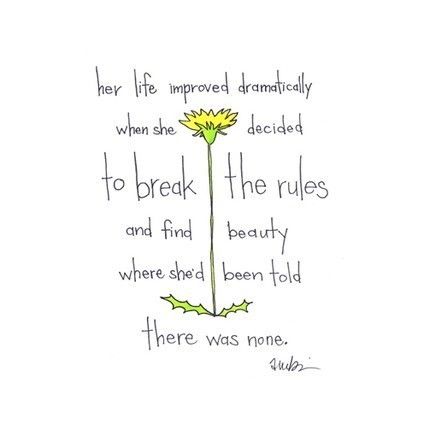
Found at Live. Love. Learn. Breathe.