A
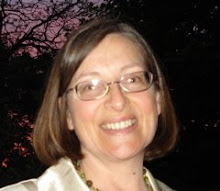
lovely friend left this Earth on Monday. Rather than let cancer ravage
her brain, she chose assisted dying -- while she was still joyful ...
radiant ... luminous. With everything unimportant stripped away, she
gained a wisdom beyond her years. Visiting her in hospital was like
receiving darshan from a cherished guru.
I
don't know what to do with all my mixed emotions. Grief at the loss of a
friend (and at the thought of her partner's deep sorrow and loneliness).
Gratitude that I have special memories of time spent together. A sense of purposelessness (after all, if it's that easy to no longer exist on this physical plane, then ...). Some (dare I admit it) anger that she didn't wait longer to give miracles a
chance. Blessed to have been some small part of her living, and dying, well.
And yet I wouldn't trade these deep emotions and mixed feelings for anything. They are my lifeblood. They are what make me work so hard for the children of all species. The deep sadness and raging anger at the fossil fuel greed that is making the future a thing of the past juxtaposed with the utter joy and delight that children offer us. The sense of foreboding (knowing too much about how rapidly this climate change emergency is playing out, still with no concerted global mitigation) together with a complete sense of awe and contentment when the sun shines a certain way through the trees.
When I die, I want to be as lighthearted as my friend was. And my sense now is that the only way I'll be able to make that dream come true is to keep working, on behalf of all the children of all species, to avert planetary disaster.
My deep emotions keep me connected to the global problems -- and fighting for their solution.
Showing posts with label feeling bad. Show all posts
18 September 2016
07 August 2016
Faith, Hope and ... Activism?
Out of the blue the other day, a friend told me he'd looked up the original Greek words for the three theological virtues of "faith, hope and charity" to see what they originally meant or referred to. Faith, yup, no surprises there, from what I recall of our conversation. Hope had more of a sense of promise, like when we reassure worried children that there are no monsters under the bed -- or that there are many adults in the world working to take care of Nature.
But charity, that one surprised me. As you know, "charity" and "love" are often used interchangeably in the Biblical expression, "... but the greatest of these is charity / love." So let's define it first.
In the original, the form of love referred to was agape (αγάπε) (in Latin caritas, which led to the English "charity"). Agape is a selfless, sacrificial love ("as distinct from erotic love or emotional affection," according to my dictionary), not easy to translate into English. Someone named Michael on a Catholic listserv explained it this way:
"Picture someone we've treated shamefully, and have beaten to within an inch of his life, jumping on a mine one of us has triggered, while pushing us out of the way, in order to save our lives, and you should have the idea. This is a love we could never hope to produce on our own, and it was seeing this love in action that caused Roman pagans to leave their comfortable, and safe, seats in the Flavian Amphitheater to join the Christians on the floor below so that they could die with them."Mother Teresa certainly understood agape. "Love has to be put into action," she was known to say. So charity is activism and to love and be charitable is to serve, to act on behalf of good causes.
The next time a couple uses that passage from 1 Corinthians in their wedding ceremony, you might wonder what kind of activism they will be putting their agape love towards and sharing in together. Let's hope it's climate change activism, because we need as many souls as we can get to win this one for all the children.
*******
Just want to share a bit of an epiphany I had this past week. Want to weigh in? I've always thought that people didn't want to talk about climate change because it makes them feel bad. That's definitely part of it, but I think there's a middle step I've been missing. Because (some/many/most?) people (in North America) see climate change as negative, they deliberately push it out of their realities and make a choice not to read or watch videos about it.
Then, because these people haven't spent the time and emotional energy to learn about it, they don't have anything to say about it. (Not that that ever stops the deniers / skeptics / ignorers / delayers!) These people are then uncomfortable participating in a discussion about it, and that discomfort tends to shut the conversation down.
Does this make sense?
25 May 2014
Creating Change is Like Gardening
It was a sad day for me. I discovered yesterday morning how difficult it is to change a norm, even if it's a simple change (with not much sacrifice attached to it) and even when making the change would be a gift to the children and their future.
For almost a year, I've been a member of a group of teachers who are interested in social justice issues. I sit on the sub-committee that deals with environmental justice issues, so it's normal that we would bring forward environmentally related issues.
Yesterday I presented a simple motion that we transition to meatless meals at our meetings (which would amount to a couple of lunches, the three times per year when we meet). The supporting statement explained that eating lower on the food chain (note no use of the V word) has many benefits.
My rationale was that this would lower our carbon footprint and set an example to other educationally-focused groups. It truly is the easiest way we can reduce our personal and collective greenhouse gas emissions.
Industrial livestock processing (veganspeak: the inhumane torture and slaughter of almost 30 billion animals every year in the USA alone -- but I didn't use that language, because it's often considered inflammatory) (imagine how it feels to the animals, then compare that to the "pain" we feel when we "feel their pain" -- we're such wimps at times, eh?) is one of the most carbon-intensive and environmentally damaging human activities on the planet, polluting water, degrading land, and spewing carbon, nitrous oxide and 35-40% of anthropogenic methane emissions.
It took me three meetings to get up the nerve to put forward this resolution. I guess I already knew what the reaction would be. And I was right. To be fair, I was encouraged by how many people spoke in favour. But we use a consensus model and that means that one person holding up a red card can scuttle a motion. Four or five people held up red cards. One person tearfully admitted she's not ready to give up meat yet. (For six lunches per year?) Another said she didn't want to lose her freedom of choice. (Forget that billions of people are losing their freedom to choose to live on a habitable planet.)
The motion was defeated. I was defeated. Afterwards, I got some advice and had some helpful discussions. I'll rework and reword my motion and present it again the next time we meet. But the bittersweet ending came during our farewell go-round. One of the no-voters thanked the group for opening her up to new ideas that haven't been within her realm of consciousness. "I might even start eating less meat," she said. "But not quite yet."
What do I take from this experience? Creating change is more like gardening than building. We have to plant our seeds (the earlier the better) and then be patient. A lot of the process is outside of our control ... though definitely within our circle of influence. Time for me to tend those seedlings.
p.s. Speaking of food growing, the news from drought-afflicted California grows ever more terrifying!
From 7 States Running Out Of Water: "At [the current] usage rate, California has less than two years of water remaining."
And this, from Cows, Rice Fields and Big Agriculture Consume Well Over 90% of California's Water: "Agriculture uses 93% of California's water and almost half of that is devoted to growing alfalfa for shipment to the Far East, mainly China, to feed their cows. California is, in effect, shipping almost half its precious water to China."
For almost a year, I've been a member of a group of teachers who are interested in social justice issues. I sit on the sub-committee that deals with environmental justice issues, so it's normal that we would bring forward environmentally related issues.
Yesterday I presented a simple motion that we transition to meatless meals at our meetings (which would amount to a couple of lunches, the three times per year when we meet). The supporting statement explained that eating lower on the food chain (note no use of the V word) has many benefits.
My rationale was that this would lower our carbon footprint and set an example to other educationally-focused groups. It truly is the easiest way we can reduce our personal and collective greenhouse gas emissions. Industrial livestock processing (veganspeak: the inhumane torture and slaughter of almost 30 billion animals every year in the USA alone -- but I didn't use that language, because it's often considered inflammatory) (imagine how it feels to the animals, then compare that to the "pain" we feel when we "feel their pain" -- we're such wimps at times, eh?) is one of the most carbon-intensive and environmentally damaging human activities on the planet, polluting water, degrading land, and spewing carbon, nitrous oxide and 35-40% of anthropogenic methane emissions.
It took me three meetings to get up the nerve to put forward this resolution. I guess I already knew what the reaction would be. And I was right. To be fair, I was encouraged by how many people spoke in favour. But we use a consensus model and that means that one person holding up a red card can scuttle a motion. Four or five people held up red cards. One person tearfully admitted she's not ready to give up meat yet. (For six lunches per year?) Another said she didn't want to lose her freedom of choice. (Forget that billions of people are losing their freedom to choose to live on a habitable planet.)
The motion was defeated. I was defeated. Afterwards, I got some advice and had some helpful discussions. I'll rework and reword my motion and present it again the next time we meet. But the bittersweet ending came during our farewell go-round. One of the no-voters thanked the group for opening her up to new ideas that haven't been within her realm of consciousness. "I might even start eating less meat," she said. "But not quite yet."
What do I take from this experience? Creating change is more like gardening than building. We have to plant our seeds (the earlier the better) and then be patient. A lot of the process is outside of our control ... though definitely within our circle of influence. Time for me to tend those seedlings.
p.s. Speaking of food growing, the news from drought-afflicted California grows ever more terrifying!
From 7 States Running Out Of Water: "At [the current] usage rate, California has less than two years of water remaining."
And this, from Cows, Rice Fields and Big Agriculture Consume Well Over 90% of California's Water: "Agriculture uses 93% of California's water and almost half of that is devoted to growing alfalfa for shipment to the Far East, mainly China, to feed their cows. California is, in effect, shipping almost half its precious water to China."
01 January 2012
Why Feeling Bad Could Save the Future
Today, we're giving compassion a holiday. As I am insulted in my local community paper (for asking people to think about our children's right to a climate-safe future), and as the few friends that we have left admit that they feel uncomfortable when my husband and I (mainly I) talk with emotion about what we're doing to the future, I'm realizing that feeling bad could be what saves the future.
People know (don't they?) that the climate change denial machine was literally born out of and modelled on the tobacco industry's conspiracy to deny the dangers of smoking their cigarettes, including using some of the same bought-and-paid-for scientists.
But I sense that it's the internet that has allowed a real nastiness to creep into public affairs and public comment on them. When I feel bad, I want it to be for the children, not because of personal attacks against me. (When I am outraged by those who don't care about the kids, I don't use their names in my writings ... though I'm starting to wonder if that's more from cowardice on my part.)
I find myself longing for the anonymity of a large city where I could do my activist work with like-minded and like-hearted people and not be the target of ad hominen attacks. (They really know how to hurt a gal: "Julie Johnson" — see that? They didn't put the "t" in my name when they were slagging me! Grrr. But truly, what does it say about their credibility when they can't even spell my name correctly?)
In that particular letter to the editor, the writer said that my concern is "shrill hysteria" and that my departure will be welcomed by many. The letter didn't make much sense to me (he was responding to a terribly edited version of a carefully constructed letter of mine, so who knows what he actually read), but the writer raised two valid points:
1. It's not about me, and my departure (whatever he meant) doesn't matter. I don't give a damn about my life or my future anymore ... what I am working for, calling for, is acknowledgement from governments and others in power that we are threatening the lives and futures of all the world's children.
It seems that comfortable people in my society can't imagine the world without themselves in it, so they're not willing to picture the carbon-constrained and climate-changed future of food shortages and famines, floods and droughts, heat waves and other extreme weather events. I wish they could take themselves out of that picture and focus on the kids. Or even just look around the world to see what's happening elsewhere already.
2. I AM hysterical! I am feeling absolutely, completely 100% hysterical (without the exaggerated aspect), and I am becoming shriller and shriller because nobody is bloody well listening! It's become quite obvious that I cannot get people out of a burning movie theatre if they're too comfortable to leave, but I won't stop yelling "Fire!" and I sure as hell am going to keep trying to pull the children out.
Well meaning friends keep giving me advice: don't get so emotional (we're talking about the future of all the children, of all species ... the potential end of life on Earth, and you don't want me to get emotional?), don't be so negative (you can check out my opinion of positive thinking in the face of global climate calamity here), be sure to offer solutions (let's get the kids out of the burning theatre before we sit down to discuss fire safety rules, shall we?).
It's not like, as one friend used to say, I'm a Cassandra (who, in Greek mythology, was gifted with the ability to hear the future but cursed so that no one would ever believe her predictions; "her combination of deep understanding and powerlessness exemplify the ironic condition of mankind," according to Wikipedia). I'm not so much predicting the future as seeing what's already happening and understanding the nature of climate feedbacks and knowing that we're heading towards a point of no return.
What really hit home recently (I've written about this before, but only just really "got it" yesterday) is why no one wants to hear and heed the warnings. Post World War II generations (my mother's, mine, my niece's) in EuroAmerican countries are soooooo comfortable that they live in a cocoon of entitlement, ease and luxury (compared with past generations of human beings). Added to that is the New Age "surround yourself with positive people" mantra. What we've ended up with is a big chunk of the globe who (literally, physically) recoil at hearing the sad and scary news about the climate change mess we've cooked up.
Now here's what makes it even worse. These people (and it's most of us) choose to avoid FEELING BAD today rather than choosing to avoid a climate hell for their children or grandchildren in the (nearer than we think) future. Am I articulating that well? People are refusing to FEEL BAD. They would rather condemn their children to future food shortages and famines than have to FEEL BAD today hearing and thinking about it.
To me, that is inexcusable. So, for 2012, here's to a year where people allow their hearts to feel the pain and their eyes to cry the tears and their minds to think about what we're doing to the children ... and then may they have the courage to speak up and do something about it. Even if it's just writing a letter to their elected representatives, because that's how we change political will.
Happy new year, folks. May we all feel this year, even if it's bad. Cuz feeling bad is better than not feeling.
Subscribe to:
Posts (Atom)