Showing posts with label Polly Higgins. Show all posts

16 December 2018

When You're Depleted and Defeated, Turn to Leonard Cohen and "Ring the Bells that Still Can Ring"

The climate talks (COP24) in Katowice, Poland have wrapped up with as little accomplished and as much left undone as expected ... but we always hope for better, don't we? I find myself doing a lot of finger crossing (for good luck) these days, but without holding my breath (expectations can be demons). 

The devastation of the biosphere can only get worse now, and faster and faster. We're likely in "only a miracle can save us now" territory already. 

My hubby is just back from the International Criminal Court in The Hague. He and others (including Polly Higgins) spoke about getting massive environmental damage due to climate change recognized internationally as a crime against humanity. But the wheels of justice turn very slowly (unless, of course, you're an African-American accused of a misdemeanor crime in the United States), so that can only be one piece of the strategy. 

But things have been heating up (pun intended, I guess) since the publication of the IPCC's Special Report on 1.5ºC, and the Fourth National Climate Assessment in the United States. Here's how I know. Amongst articles such as The 15 Most Stylish Topcoats to Wear All Winter and Damnit, Ted Cruz's Beard Looks Tolerable, Esquire Magazine offered up 


by Charles P. Pierce. The subtitle of his article is: "The lastest U.S. government climate report is a pre-emptive coroner's report, and our politics aren't equipped to deal with it." I don't think I have to say any more.

Maclean's Magazine, in Canada, is into the fray. David Moscrop wrote:


"We can’t address an existential threat with our fellow citizens standing in our path. They rob us of the hope we need to save ourselves" is the subtitle. Now, you know what I think of hope (it's a developed world luxury that we don't deserve — unless we're taking action), but I'll let him have this one because he's a newbie who has just woken up to the climate crisis and is going from zero to "climate grief" quite rapidly. (Whoever could have imagined that one of our greatest obstacles to climate change mitigation would be people who think that hope and feeling good are more important than action?!)

Anyway, my point is this. Sometimes, this calling hurts. It's hard. We can feel defeated and depleted. And when that happens, we have to have our touchstones. The people we can reach out to, the uplifting books or movies we can read or watch, and music — songs we can listen to over and over again that speak to our souls and know exactly what to tell us.

So whether you've been doing this for decades (like my husband and me) or you're just discovering how desperately bad the climate change crisis is now, Anthem by Leonard Cohen is an excellent invitation to take stock and then to keep at it ... imperfectly, if necessary.

ANTHEM, by Leonard Cohen

The birds, they sang 
At the break of day 
Start again, I heard them say 
Don't dwell on what has passed away 
Or what is yet to be. 

Yeah, the wars 
They will be fought again 
The holy dove 
She will be caught again 
Bought and sold and bought again 
The dove is never free. 

Ring the bells that still can ring 
Forget your perfect offering 
There is a crack, a crack in everything 
That's how the light gets in. 

We asked for signs 
The signs were sent: 
The birth betrayed 
The marriage spent 
Yeah, the widowhood of every government 
Signs for all to see. 

I can't run no more 
With that lawless crowd 
While the killers in high places say their prayers out loud 
But they've summoned, they've summoned up a thundercloud 
They're gonna hear from me. 

Ring the bells that still can ring
Forget your perfect offering 
There is a crack, a crack in everything 
That's how the light gets in.
You can add up the parts 
You won't have the sum 
You can strike up the march 
There is no drum 
Every heart, every heart 
To love, will come 
But like a refugee. 

Ring the bells that still can ring 
Forget your perfect offering 
There is a crack, a crack in everything 
That's how the light gets in 

Ring the bells that still can ring 
Forget your perfect offering 
There is a crack, a crack in everything
That's how the light gets in 

05 January 2014

We Certainly Live in Interesting Times

Know what? I'm sensing (and perhaps it's simply new year's verve I'm picking up on) a turn in our attitude towards the climate change crisis. My Debbie Downer side would say it's coming too late, but let's, for the sake of optimism, say it's not. People seem to finally be "getting" that decarbonizing and making the world a better place would, well, make the world a better place!

Robert Kennedy, in a speech in Cape Town, South Africa in June 1966, said:

There is a [now debunked] Chinese curse which says 'May he live in interesting times.' Like it or not we live in interesting times. They are times of danger and uncertainty; but they are also more open to the creative energy of [women and] men than any other time in history.

So as climate scientists are dreaming up ever fancier ways to tell us that +4ºC is the new +2ºC (which, as a European Union policy "guardrail" decided upon in 1996, was already way too high since crops will start failing at +1ºC and extreme weather events are already upon us) and that we're hooped, here are some examples of the new enthusiasm and creative energy that's happening in the webosphere these days. [Bold emphasis added.]

1. Guy Dauncey is one of Canada's best known and loved environmentalists. He's the one who taught me that we have to create "a compelling vision" of the future we're trying to create (which is why I go on and on about a zero-carbon world being safer, cleaner, healthier, more equitable and more peaceful than one based on depletable fossil fuels). If Guy ever gets down about the future, he doesn't let it show. Here's something he wrote in his first blog post of the year. It's number 7 in his "'Wouldn’t That Be Amazing!' Wish-List for 2014."

The World Embraces Climate Solutions Treaties
Why are we stuck in negative when it comes to the biggest crisis of them all — the global climate crisis? We have treaties to reduce this and mitigate that, but none of it cries out, "Come on over here — this is amazing!" When was the last time you used the word "mitigate" over the dinner table? "Honey, can you mitigate this soup? It’s so bland."

We need to have amazing confidence in how great a sustainable world beyond fossil fuels will be, and how much better it will be for everyone once we stop grubbing around in the dark of the Arctic Ocean and the beauty of Alberta’s forests to scrape out the last gooey substance to satisfy our addicted craving for oil. As well as Kyoto-style reductions treaties, we need Climate Solutions Treaties in which nations agree to work together to accelerate the many solutions, from solar energy to electric vehicles, from soil carbon storage to ancient forests protection.

How could that happen? I see a big gathering attended not by national leaders but by climate leaders in the world's cities, businesses and universities, all of whom are working hard to implement the solutions. They could develop some draft treaties, and then seek support from the new E-17 Group of Nations [something Guy proposes in #6 to replace the old G-20] to advance them to the global agenda in time for the big UN Climate Summit in New York in September 2014.


2. Murray Dobbin, a Canadian commentator, is calling 2014 The Year of Living Consciously.
The terrible irony of our situation is that just as we all need to be what I call "intentional citizens," we are, unconsciously and even unwillingly, becoming less and less engaged, more and more individualistic. Just what are we to do, as individuals, when faced with crises so overwhelming that our minds reel at the thought of the varied, frightening consequences: "Oops, better not go there. Way too scary. I know! Let’s go shopping!" 
Our collective institutions are similarly at their weakest points just as we need them to be at their strongest and most imaginative. Our democracy — including political parties — is increasingly unable to deliver what it once promised, let alone what we want. Universities are increasingly corporatized, jettisoning traditional ethics for corporate loot to pay their bills. 
Regulations developed over decades to protect us are either being eliminated or simply unenforced by governments whose job it once was to ensure our safety. Major media, which once, nominally at least, entertained the notion of political debate about society's direction, have been hijacked by corporatist ideology and are thus rendered incapable of seeking the truth, let alone telling it. 
So, as always, it is up to us to reverse this juggernaut, to get in its way, to make clear statements through our actions as individual citizens until a time when we constitute a critical mass of citizenry that becomes a movement for social change. And it will take time. My generation will only see the start of it. 
How realistic is such a notion? No one can say for certain how the next five to 10 years will unfold regarding democracy, inequality, climate change and peak oil. But the notion that we can behave as if it is business as usual will not wash. We can hardly expect our institutions — which like it or not are reflections of us — to address the moral imperative of facing the crises, if we don’t do so personally.


3. As if to support Dobbin, Faith Morgan (Arthur Morgan Institute for Community Solutions, which works in Cuba) wrote:
Given the lack of political will to make deep cuts in greenhouse gas emissions, it is time for us to embrace the future, and say, "A life of less energy consumption can be a good life. Let's seek it, develop it, and stop fighting the inevitable, pretending it won't come." This long view is what we are developing at Community Solutions, ways to have hope and joy in life as it is and will be. At a talk at Antioch College this fall, Wendell Berry was asked how he was able to stay positive. He didn't mince words about the problems he sees. But he said we must also keep wonder in our lives; see the beauty around us, in the earth, family, and friends. Believing there will be a good tomorrow helps. 
I learned several things from Cuba that I think are important. First, before 1990 when the Soviet Union collapsed, there were people who foresaw the approaching catastrophe and began developing solutions, living as if they already didn't have what the Soviet Union was providing. They persisted and developed and refined their approaches, even though few other people were interested. Once the emergency was upon the country, the knowledge and skills developed by these visionaries were needed and valued. So, I encourage people to find ways to curtail their energy use, experiment in living a simpler, less consumptive life — for you, for the earth, and as an example that others can follow when conscience or circumstances brings them to change. 
Second, when our Cuban friend Roberto Perez was asked whether people would turn on each other when times get bad, he paused, then said, "That's not what happens. People come out and help each other. The best comes to the surface... I know, [because] that's what happened in Cuba."

4. Juan Manuel Sánchez Gordillo, mayor of Marinaleda, Andalusia, an intentional utopian community in Spain, says:
We have learned that it is not enough to define utopia, nor is it enough to fight against the reactionary forces. One must build it here and now, brick by brick, patiently but steadily, until we can make the old dreams a reality:  that there will be bread for all, freedom among citizens, and culture; and to be able to read with respect the word "peace." We sincerely believe that there is no future that is not built in the present.

5. Polly Higgins, who instituted the Eradicating Ecocide Global Initiative, reminded us of John F. Kennedy's challenge of landing a human being on the moon, Nelson Mandela's challenge of working for his people despite life imprisonment, and William Wilberforce's challenge of ending the slave trade.

The impossible happened. How? Each set an intent, never let it waver, empowered others to help make it happen and expanded people's vision. Each of them shifted their vision of what is possible — and the world shifted its vision too. 
In fact, the impossible happens many times and in many ways in all of our lives every day — it just may not be as dramatic as the image of the first astronaut setting foot on the moon, or the day apartheid was declared a crime or the moment the British Slavery Abolition Act was brought into force. Shifting our vision — meeting the challenge that comes with facing the seemingly impossible — brings with it the means to get there. Each step takes us closer.
Each of these men handed over the baton to others to help make their vision become true. What they sought was something greater than any one person could achieve and they united many in a common intent to help make something truly remarkable happen. Each of them helped create a legacy from a place of genuine belief in a greater good. 
What we do know, and can learn, from each of them, is that each of us can bring our vision of a greater world to bear, be that through our standing up for bringing an end to an injustice or by supporting others who are speaking out. We each have different roles and often it is not until later that we see how each of our lives can and does have impact. 
It seems to me that the starting point is to challenge ourselves — especially when the justice we seek seems to be so impossible. For me, one phrase keeps on coming back: "It's up to us what happens next." I wonder how many times each of the above said to themselves words to the same effect.


We definitely are living in interesting times. Let's work together to make that a blessing rather than a curse.


19 February 2012

Ecocide - A Crime Against Peace, a Crime Against Humanity, and a Crime Against the Future

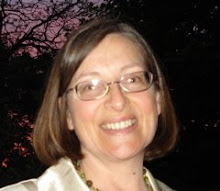
Polly Higgins is an indefatigable UK lawyer whose main client is the Earth. Polly is on a mission to have the United Nations accept "ecocide" as an international crime against peace. (This is a photo of Polly presenting in Toronto in February 2012. Since then, she's presented all over the world.)

She and her team at Eradicating Ecocide define ecocide as "the extensive destruction, damage to or loss of ecosystem(s) of a given territory, whether by human agency or by other causes, to such an extent that peaceful enjoyment by the inhabitants of that territory has been severely diminished."


Ecocide would belong to jus cogens, which is the highest rung of international law hierarchy. It would sit at the same level as crimes against peace, crimes against humanity, genocide, war crimes, slavery, torture and piracy. (Check out my Rights for Future Generations webpage to learn more about ecocide from a different perspective: stealing a viable future from future generations, or progenycide.)

An international law of ecocide would make corporate CEOs and heads of state legally responsible for their destruction of Earth. People and planet would come before profits. (See the video below.) Of course, it will be a big help if we can get the economics right, requiring corporations to internalize the cost of social and environmental damages they cause, which they are now allowed externalize (one example of indirect subsidies to these companies), before pocketing their profits. A simple change to the corporate charter everywhere would level the playing field — and make ecocide economically fatal.


And to get a sense of the type of destruction Polly Higgins is referring to, watch this trailer for the four-segment movie, Fever, by LifeMosaic. It's a four and a half minute heartbreaker.