09 September 2012

You CAN Handle the Truth!

You know what? We're in a no-analogue Catch-22. Psychologists tell us not to tell people the full truth about the climate change emergency because they won't be able to handle it and will shut down and not do anything. But if we don't tell people the full truth, they're not going to do anything anyway! I've recently asked readers and friends for advice on how to handle this conundrum. Below is some of the feedback I've received, and then I'll give you my new take on all of this.

Unknown shared this: "I say go ahead and tell the whole truth, don't sugar coat it. You'll get people more scared, but maybe a little fear is what we need -- along with a heaping dose of reality. People are still WAY too self-absorbed, or worried about which celebrity is divorcing who, or which sports team scored higher than another. They need to realize that none of that matters at all, that their world is crumbling around them and they're too blind (or busy watching television) to see it."

So, truth as wake up call! That resonates with me. Unknown finishes with "So bring it on, sister!"

My online friend, David Wilson, concurs with the age-old adage "The truth will set you free." He also brings up an excellent point, told through this anecdote:
"Back in the days of Simon Charlie's Festival of the Sun, there were always people showing up and taking too much of the wrong thing ... bikers on tequila, kids on shrooms, acid, whatever ... and you know, my learning then, which has not changed much over the years, was and is that people get through their freak-outs if someone will just invest the time and energy to talk to them, calmly, openly, compassionately, in a way that lets them know you are not going to up and leave them stranded there."
So I can't just plop the full truth on the table and walk away. I know there's always someone who asks, "What can I do?" as if they haven't been awake for the past 20 years. "Create political will" is not the first thing I'm going to suggest to people like that. But there will have to be hand-holding and hugs. After all, I've been dealing with this bad news for years now. The general public has not. (More on that here.) 

And patients who have just received a terminal diagnosis don't jump into action -- they have to digest the news and grieve a bit first. Then, however, according to my husband-the-doctor, they are ready to jump into action, to do whatever it takes to change their prognosis or prepare for the end.

My husband-the-doctor and I have had many conversations about the psychology of climate change communication. There is just a small handful of psychologists who have driven the don't-tell-the-truth-about-climate-change agenda here in North America (and in the UK, too, I think). We suspect these psychologists weren't alive before World War II, so they haven't witnessed how the people in our culture can rally together when necessary. Nor have they worked in medicine to witness the courage of people who discover they are terminally ill. 


It's not that people (in our culture/society -- it's frustrating when psychologists talk about "people" as though they mean the whole human species when their research has dealt only with Americans; and even there, check out the Yale study Global Warming’s Six Americas) can't handle the truth. It's that people need someone -- their doctor, a Winston Churchill, their president or prime minister, a Climate Reality Project leader, ahem -- to be there for them once they've absorbed the truth.

Furthermore, the truth does need to be the full truth (for example, the history of the denial machine) so that cognitive dissonance doesn't set in. You know, "the state of having inconsistent thoughts, beliefs, or attitudes, especially as relating to behavioral decisions and attitude change." In other words, if people finally come to see the urgency of what really needs to happen in the world but still don't see their leaders taking action, that's going to mess with their minds unless they understand all the forces at work to keep us embroiled (pun intended!) in the fossil fuel economy.

And finally, here's my epiphany for the week (keeping in mind that sometimes my epiphanies are things I figured out long ago and then forgot about ;-). When "common knowledge" says that people can't handle the full truth about the climate change emergency, that they'll shut down and become immobilized, there are quite likely two flaws in that thinking. 

First, it's quite possible that the researchers (including the armchair variety) who tell us this are simply projecting their own fears and attitudes onto the rest of us. 

Second, that view of the human spirit forgets that we've really only been taking people to the door to peer in. 
We haven't yet been taking people right in, inviting them to sit down, and introducing them to the emergency in a way that allows them to calmly get to know it.  
We haven't yet asked them to feel deeply the plight of others in more climate-change-vulnerable regions of the world -- or their own country.  
We haven't yet put a box of tissues on the table next to them and encouraged them to cry their pain or sing a song of lament (the lost art in our society of passionately expressing our grief or sorrow) that will surely bubble up once this new knowledge is deeply understood -- and felt.  
And we haven't yet urged the perfectly natural anger that parents will feel once they realize their children's future is literally at risk because we're not willing to make the switch to cleaner, safer, healthier, more peaceful and more equitable perpetual energy technologies. 

So no, unlike Jack Nicholson in A Few Good Men, we do not have the right to tell our fellow citizens that they can't handle the truth. We've never given them the chance.

02 September 2012

I've Finally Figured It Out!

I discreetly followed the proceedings of the Republican Party convention in the United States this past week. (Know thy enemy, eh?) The things they say and believe and promote – it's like they're from another planet, one without poor people or ecological limits. It truly does seem as though money and American hegemony are more important to them than life. (Cue gnashing of teeth sound effects.)

After bouncing around the blogosphere a bit, I had a sudden revelation! I ran upstairs to bounce it off my husband, who had just had his own epiphany. Together, we have worked it out. Not solved it, mind you. Just figured it out.

And here's how "it" goes*:

If the powers-that-be in the United States admit to the global climate change emergency and their role in it, their citizens will start clamouring (or clamoring, I guess) for the government to get going on solutions. And that will entail spending some money. Where will that money be diverted from? Subsidies we give, directly and indirectly, to fossil fuel corporations? The Pentagon and its odious and sometimes illegal military operations? The CIA and its odious and mostly shadowy doings around the world?

Now, why would that be considered a bad thing, given that most people would say they prefer peace? Well, the USA has to maintain its place as the world's fossil fuel superpower. And the only way to do that these days is through military force and might (with a whole whack of lies and deceit and mercenaries and wagging the dog thrown in, to make "the game" more fun, I suppose; take Libya and Syria as examples – contact me if you don't understand what I'm alluding to). 

Okay, but why does the USA have to remain the global head honcho when it comes to fossil fuels? Because it depends on the fact that the American dollar is the world's petro-currency. The only internationally approved currency for buying oil is the American dollar. (Saddam Hussein and Moammar Gaddafi were trying to change that, and look what happened to them! Check out this October 2009 article by Robert Fisk in the Independent, The Demise of the Dollar, for more info.) On the other hand, people can pay for wind turbines and solar panels with any currency they want! So if fossil fuels go down, and the USA isn't bringing in billions (trillions?) of dollars in petro-dollars every year, then it will go down too, completely bankrupt. 

So, when I complain that American conservatives (of both Republican and Democratic ilk) think money is more important to them than life, it's true, they do. Because they realize, whether intellectually or viscerally, that the "greatest" nation on Earth is built on a fossil-fuel-dependent house of cards. All the money that floats around the USA – and buys the 1% their mansions and yachts and Hummers – comes from that country's special fossil-fuelled status.

Ergo, perhaps the solution lies in helping small communities see that their resilience no longer lies in the security provided by a nation, but will come from their working together at the local level to build soil, grow food, collect rainwater, and generate energy from perpetual sources.  

The USA has to deny climate change not only because of its dependence on fossil fuels, but also because of its dependence on fossil fuel dollars. Perhaps the sovereign nation state and the American dream are ideas whose time has passed. 

* With apologies to those who have known this all along. 

26 August 2012

Cole Porter and the Climate Reality Leadership Corps

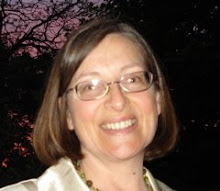
That's me, at the Climate Reality Leadership Training 
Well, my trip to San Francisco to train with Al Gore and the Climate Reality Project was invigorating and memorable! After a tiring but fascinating 22-hour train trip, it was inspiring to spend three days with 1000 other like-minded and like-hearted people ... from 57 or so different countries, no less! I'm now a trained presenter, and look forward to sharing the Climate Reality slide shows with people of all ages and in all walks of life throughout my small corner of the world.

I had to laugh that even amongst allies, I still found myself holding a much more acute view of the global warming problem, the necessary solutions, and the power our fossil-fuelled industrial civilization (no, not the whole human species) holds to radically alter the biosphere, making it inhospitable to life, period (not just to human civilization). It's somewhat of a curse living with a full-time science advisor (aka my husband) who spends practically every waking moment reading and synthesizing the scientific research on global warming and climate change. I often rue knowing so much about what's really going on.
But a great gal (and a science teacher) sitting next to me restored my faith in a master evolutionary plan when she reminded me that the newly discovered creatures living around the thermal vents at the bottom of the oceans will survive just fine.

 After all, they didn't evolve in the narrow atmospheric temperature range that we're used to. So all hope is not lost. If we don't get our butts in gear and stop our carbon emissions while pulling CO2 out of the air, humans will disappear and millions of other species will disappear along with us.

But the tiny animals that don't need the sun (relying on chemotropic bacteria instead of photosynthesis for their energy) and that can survive water that's hotter than boiling will do just fine on a too-hot-for-the-rest-of-us planet. I suppose that soon enough, they'll crawl out of the ocean and repopulate the Earth. Just not with us. Or roses and lilacs and elephants and otters. (Actor Christopher Reeve used to say, "Once you choose hope, anything's possible." 
So I won't be giving up anytime soon.)

I'm not sure yet whether I'll tell the full truth about the reality of the climate change situation when I make my presentations. Mr. Gore has decided not to, choosing instead to talk about the end of human civilization. He probably knows his audiences well. Picturing the world without "me" in it is existentially difficult. Imagining a world completely devoid of the human species is nigh on impossible.

I keep thinking that this desperate state of affairs will motivate the pants off people to do whatever it takes to cool the globe. My theory, ahem, doesn't seem to work in practice. I don't know what the philosophers have to say about my dilemma (full truth or only partial truth?), but some psychologists believe that people (in our North American society, at least) simply cannot handle knowing the reality.


I watched De-Lovely recently, a movie about the life of Cole Porter. (No, I don't spend every waking moment contemplating the end of life on Earth.) I knew nothing about him except for some of his songs, so I did some research. (Yes, this is relevant to the question at hand ... wait for it.) It seems that some of his shows in the 1930s were failures. According to Wikipedia sources, this convinced Porter that his songs did not appeal to a broad enough audience. In an interview, he said, "Sophisticated allusions are good for about six weeks ... more fun, but only for myself and about eighteen other people, all of whom are first-nighters anyway. Polished, urbane and adult playwriting in the musical field is strictly a creative luxury."

So you see, w
ith both Al Gore and Cole Porter suggesting that people won't listen to what they don't want to hear, I'm still torn on whether to tell people about the impending consequences of Arctic summer sea ice collapse (2012 is the worst year ever) and the drought we're seeing all over the world (2012 appears to be the worst year yet for Northern Hemisphere drought). (See short videos below.) I welcome your frank (but not brutal) advice on which way I should go. Thanks!


Arctic ice extent is critical to Earth's temperature. Less Arctic summer sea ice means more Northern Hemisphere heat and climate disruption. 


Can you say "bread basket"?

19 August 2012

We're Committed to Climate Chaos, Folks ... It's Simple Math


A lot of people still think that we'll be able to turn global warming and climate change around as soon as we decide we'd better. They live under the tragic (and ecologically illiterate) misconception that once we turn off the metaphorical "tap," the water will quit rising.

What these people don't realize is that we've turned on several other (figurative, of course) water spouts, as well. We can no longer control these or turn them off, and so greenhouse gases (GHGs) are starting to spill and spew over the sides of the tub.

We've already increased the global average temperature by 0.8ºC – and look what we've unleashed! And then the ocean heat lag commits us to practically a doubling of whatever the current warming is.

Our fastest possible stabilization of atmospheric greenhouse gases will take so long, we're ensured another 0.4ºC before we get finished.

Then there's the loss of the cooling effect of aerosols that we'll get once we stop burning the fossil fuels that are causing the warming in the first place. (Yup, the pollution from fossil fuel energy cools the atmosphere. Weird, eh?) That could lead to another 0.5ºC (and as much as 0.8ºC, according to the IPCC).

Then there are the climate feedbacks to worry about. We're already seeing positive carbon feedbacks in the Arctic, which are leading to larger losses of Arctic summer sea ice each year as well as thawing tundra permafrost and subsea methane hydrates. These will add at least another 0.4ºC, and if you've been keeping track, we're now committed to about 3.0º of global heating.

Guess what happens at +3.0ºC? Declining crop yields in all regions, leading to price hikes. Food shortages. Social upheaval. And famines. More droughts and longer droughts. Greater heat waves. Further floods. In short, we're committed to climate chaos.

So if we don't turn off the tap yesterday and start bailing water out of the tub, then we could be well on our way to +7.0ºC, which will "make most of the planet uninhabitable due to intolerable heat stress" (Sherwood and Huber, 2009).

At what point do we declare the emergency? At what moment will we reach the tipping point? What (or who) will be the straw that breaks the camel's back? I'm on my way to San Francisco for the Climate Reality training with Al Gore. Perhaps I'll be the one to somehow find the courage – and the mathematical chutzpah – to change the world!

For more information on global warming commitment, please visit the Climate Emergency Institute.