Showing posts with label forests. Show all posts

20 October 2019

Guest Post: "A Short Rant about LOVE, and the CLIMATE"

When I read Antonia Paquin's "short rant" this morning, I asked her right away if I could post it here for you. Antonia is a young friend nearby who gives her life's energy to ensuring a future for us all. Much love to you, Antonia, with thanks for sharing this with my readers!

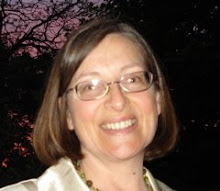
Antonia Paquin, in Victoria (with thanks to Creatively United)


A Short Rant about LOVE, and the CLIMATE
Sometimes I find myself disconnecting from the word "climate," because it seems obscure and somewhat nebulous unless you're a scientist who studies this stuff.

I've found the following to be helpful in bringing "climate" into my immediate experience:
  • Notice the breath you just took ... now the one you are about to take. You are taking climate into your body.
  • Look outside, look around you, really LOOK, noticing the trees, the sky, the soil. You are looking at the climate.
  • Feel your heartbeat ... touch your fingers to your wrist, or neck to feel your pulse, or just feel your body moving ever-so-slightly by your heart beating. You are a living creature, interacting with your surroundings. We are also climate.
Remember the Earth is extremely resilient. She knows how to heal herself. Humans are also resilient. We can adapt to change. Though the world feels grim right now, especially with this messy [Canadian federal] election, we are inevitably forced to call into question the major systemic failings that have led us to where we are, which is a good thing!

We are being collectively called to question the ideologies, and the political and economic systems that led us into this mess, the colonial way: "Dominate people, dominate land, YOU SHALL HAVE NO HEART."

This is the movement to end all movements.

We are now being called to decolonize the crap out of ourselves and remember who the hell we are as humans.

Could it be that humans aren't somehow above the natural world?

Could it be that we don't have the right to pillage and rape the Earth?

Could it be that humans are actually inextricably ~connected~ to the Earth?? WOW! You don't say?

David Suzuki, our beloved national man of science, is preaching this message loud and clear. Time to wake up and smell the soil, friends!

Here's how we "fix the climate":
  • Tune into what Indigenous land defenders and water protectors have been saying for hundreds of years. Support these movements with your money, time, energy. Uplift voices of black and indigenous folks, people of colour.
  • Breathe deep, ground yourself in gentleness and self-compassion so that you feel safe. Then take time to call into question your own belief systems, assumptions, attitudes. We can all do this together.
  • Have "adventure conversations" with others. Bring up things like climate, the human condition, hope, guilt, fear, grief, love.
  • Vulnerability is powerful. Connect deeply with your fellow humans, know that they probably have similar fears and doubts that you have, and when we share ... it can be so healing.
  • Cry and cry and cry, then laugh. It's okay to feel like a mess. [This is my favourite line! JJ]
  • Spend time in nature, FOREST BATHING, to remember that Earth is magical and resilient. Every single cell in your body is made of the Earth. The trees and rocks and rivers are your kin. 
  • In so many ways you are also magical and resilient. Often our minds forget this, but somehow our hearts can never fully forget this. 
Okay, my rant is over. 
Thank you. I love you. 
*****

And our thanks and love to YOU, Antonia, for these wonderful calls to reconnect ourselves with our first mother.

11 September 2016

A Fun Way to Spend a Weekend (Talking about Climate Change)

We have a wonderful house guest here this weekend, and oh, what fun we're having. If you can call yakking about climate change till all hours of the day and night "fun"! ;-)

Our guest is Earth Doctor Reese Halter, one of the most dedicated environmental activists we've ever met. We're doing some filming at different sites around our island community to help support his Save Nature Now: Bees, Trees and Seas campaign to mobilize the Millennials and TBDs (apparently the younger generation doesn't have a name yet). 

We've filmed on the beach and on the bluff, at a garden and in a forest, and at a marina with orca whales in the backdrop.

Dr. Halter, who considers himself a specialist in Earth's life support systems, is a hero in our eyes. He has dedicated his whole life to helping people around the world wake up to what we're doing to the biosphere. Nature is collapsing all around us. Climate instability is impacting every region on Earth. 

Reese does TV interviews, radio shows and daily podcasts. He attends protests and demonstrations. He teaches and lectures. He speaks on behalf of the orcas, the bees and the trees -- and man, does he ever know his stuff! He fights poachers and plastics. His "clients" are Nature and all the animals (including the human ones). 

What Reese wants to do is let young people know that there are some wonderful technological solutions in store. But they have to get to work guarding the oceans and forests, and saying no to oil, gas, coal, fracking and pipelines. The science is irrefutably precise. But there's no time to lose. We've run out of time. Our planet's ecosystems -- the oceans and forests that support us -- are under siege. 

Reese is going to confirm for young people something they've perhaps been inarticulately feeling -- that they're enslaved by fossil fuels corporations and the big banks. They (indeed, we) are no longer free. To win back their freedom, they'll have to join the fight to Save Nature Now!

Earth Doctor Reese Halter is someone who exemplifies that old adage by Chief Dan George:
If you talk to the animals they will talk with you and you will know each other. If you do not talk to them you will not know them and what you do not know, you will fear. What one fears, one destroys.
Then with his outgoing and enthusiastic nature, Reese combines the Chief Dan George quote with this more positive outlook of Senegalese forestry engineer, Baba Dioum:
In the end we will conserve only what we love, we will love only what we understand, and we will understand only what we are taught.
I hope you'll spend some time learning about Reese Halter and letting him teach you. For the sake of the children's love for all animals, of all species, and for all the collapsing ecosystems ... the bees, the trees and the seas.


02 August 2010

Burning the Candle at Both Ends Can't Last Long, Let Alone Forever

Two very big bad "newses" this week:
  1. Russia is burning.
  2. Phytoplankton populations are plummeting.
So, on land, our food sources and forests are burning up. In the oceans, the very foundation of the marine food web (which extends onto land) is disappearing. Is it possible that someone might NOW announce the climate change emergency?

As reported by the BBC, a United Nations team, "shocked by the destruction it saw on the island of Sakhalin and the vast region of Khabarovsk near the border with China," has said that "the scale of the damage caused by recent forest fires in Russia's Far East amounts to a world-wide ecological disaster."

"The experts said the damage would have far-reaching consequences not only for neighbouring countries, but for the entire northern hemisphere." Russian Prime Minister Putin has called in the army to help with the devastation.

According to Alexei Lyakhov, director of Moscow's meteorological service, temperatures for July were 8 degrees Celsius (14 degrees F) higher than normal!! He sees the heat as evidence of global warming.

Lyakhov also says that in 130 years of daily weather monitoring in Moscow, there has never been such a hot summer. "This is not normal weather, this has never happened."

Imagine. Siberia, the coldest place on the face of the planet in winter is experiencing a heat wave — temperatures are hitting 32 degrees C! (That's pushing 90 degrees F!) And Moscow has broken temperature records, reaching 37.2 degrees C (99 degrees F) on Monday, July 26.

According to Agence France Presse (reported at WeatherOnline), "an emergency drought situation has been declared in 19 of Russia's 83 regions with crops dying on an estimated 9.6 million hectares of fields."

So not only are "developed" nations in the northern hemisphere going to struggle as the Arctic summer sea ice melts away (doing away with our summer "air conditioning"), but now we're also facing this carbon feedback: the heat of global warming dries the forests, which start to burn, releasing more carbon and creating more heating — which will devastate our agriculture: more heat = more summertime fires and more droughts. That extra heat also means that green plants are withering instead of absorbing carbon, another carbon feedback.


*******

And why should we be concerned about a bunch of microscopic plants floating around in the ocean? Because a 40 percent decline in the world's phytoplankton is a planetary catastrophe! Planet Earth is, after all, an ocean planet — all life on land came from the oceans and is entirely dependent on the oceans. For example, phytoplankton produces half of the oxygen we breathe. (And we're burning up the trees and withering away the green plants that produce the rest of our oxygen ... hmmm, deoxygenation of the planet. Sounds to me like we're heading for suffocation.)

Again, the BBC is on it. According to researchers at Dalhousie University in Halifax, Nova Scotia, Canada, "the amount of phytoplankton — tiny marine plants — in the top layers of the oceans has declined markedly over the last century."

An Icelandic website explains that in the summer, phytoplankton live in the upper photic zone (the layer of the ocean reached by sufficient sunlight to allow plant growth) where they are carried by currents. Phytoplankton, like plants on land, have the ability to use sunlight to make organic matter out of non-organic, using the process of photosynthesis. Phytoplankton then become the main source of organic material for other organisms, especially as food for zooplankton (tiny animals), which in turn are prey for young fish and pelagic fish (those that inhabit the upper layers of the open sea). "So the phytoplankton is the basis for all organic life in the sea...."

Phytoplankton need sunlight from above and nutrients from below, but as the oceans warm they are becoming more stratified, limiting the availability of nutrients, conjecture the researchers at Dalhousie. Since phytoplankton removes carbon dioxide from the air during photosynthesis, this trend could act to accelerate global heating — another carbon feedback.

Carl-Gustaf Lundin, head of the marine programme at the International Union for the Conservation of Nature (IUCN), says that the implications could be significant. "If in fact productivity is going down so much, the implication would be that less carbon capture and storage is happening in the open ocean. So that's a service that humanity is getting for free that it will lose."

Alas, we are burning our candle at both ends — land and sea — and threatening Nature's gifts (ecosystem services) at the same time. And we're the intelligent species?


26 August 2009

102 Days - Forests: Damned If We Do, Damned If We Don't

"What will we do in the future without wood? The end of the forests has come."
The Foundation for the Economics of Sustainability

Another of those eerie twists of email fate: two messages about forests and their role in combating in climate change came in yesterday - one happy, the other immediately cancelling it out.

THE HAPPY ONE

The World Agroforestry Centre, based in Kenya, has discovered through detailed satellite imagery that although agriculture, particularly in the developing world, is often associated with massive deforestation, almost half of all farmed landscapes worldwide include significant tree cover.

The press release from UNEP says: "This is the first study to quantify the extent to which trees are a vital part of agricultural production in all regions of the world. It reveals that on more than 1 billion hectares - which make up 46 percent of the world's farmlands and are home to more than half a billion people - tree cover exceeds 10 percent."

Dennis Garrity, the Centre's Director General, says "The problem is that policymakers and planners have been slow to recognize this phenomenon and take advantage of the beneficial effect of planting trees on farms. Trees are providing farmers with everything from carbon sequestration, to nuts and fruits, to windbreaks and erosion control, to fuel for heating and timber for housing. Unless such practices are brought to scale in farming communities worldwide, we will not benefit from the full value trees can bring to livelihoods and landscapes."

Trees on farms are useful in several other ways:
  • fertilizer trees improve crop yields and enhance soil health
  • fruit trees enhance nutrition
  • fodder trees feed livestock
  • timber and fuelwood trees provide shelter and energy
  • medicinal trees provide remedies
  • other trees provide global commodities such as coffee, rubber, nuts, gums and resins
  • trees also contribute to erosion control, water quality and biodiversity
Garrity goes on to say that investment and developments in agroforestry over the next 50 years could contribute to the alleviation of climate change, removing significant amounts of carbon dioxide from the atmosphere. (Poor Mr. Garrity doesn't realize that we don't have 50 years.)

THE SCARY ONE

In a 24 August 2009 Associated Press article, Beetles, Wildfire: Double Threat in Warming World, by Charles J. Hanley, it becomes very clear that bad things are happening much faster than good things. (I think we'll need a new word for this phenomenon.)

The vicious circle of warmer weather allowing more insects to kill more trees in the boreal forests around the northern hemisphere, which then absorb less CO2 and add to carbon emissions through wildfires, is worsening year by year.

On the southern edge of the Siberian forests, warmer, drier weather is stifling regrowth of burned-out areas, turning them to grasslands.

Are we looking at peak wood? An Armageddon of insect-infested, burnt-out landscapes? What have we wrought? "The end of the forests has come."